
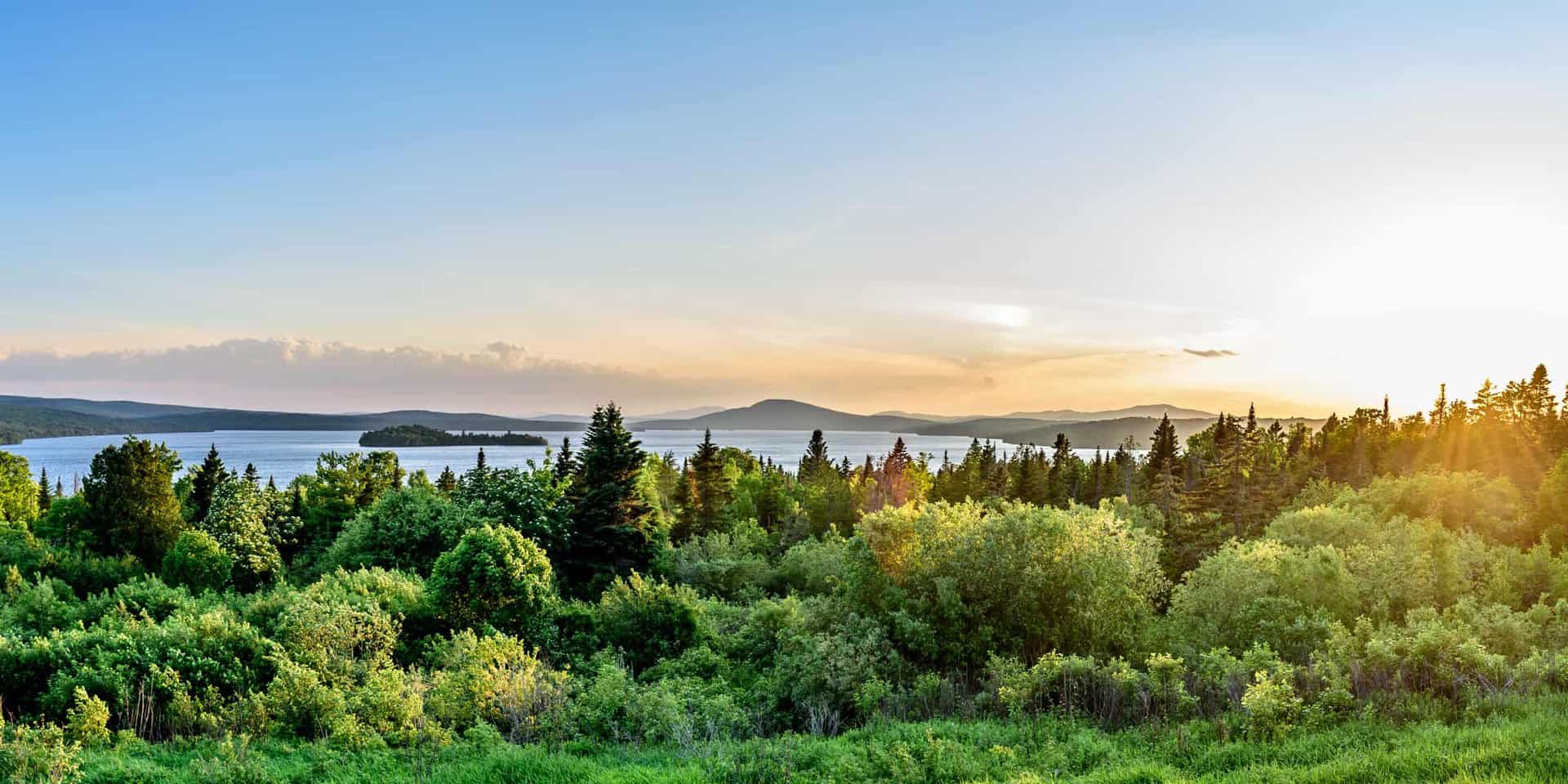
That Old Stone Wall in the Woods: Reading the History of Maine Land
You're walking through a wooded Maine property when you notice something that doesn't seem to belong there: a stone wall running through mature forest, sometimes for hundreds of feet. There isn't a house nearby, no obvious field, and no immediate reason why someone would have spent countless hours moving rocks and carefully stacking them in a line through what is now the middle of the woods.
But there's a simple explanation. It probably wasn't always woods.
One of the fascinating things about owning land in Maine is that the landscape often contains clues about the people who lived and worked there long before us. Stone walls, cellar holes, old roads, apple trees, wells, foundations, grown-in fields, rusting farm equipment, and sometimes even lilacs blooming beside a house that disappeared generations ago can all tell part of the story.
If you know what to look for, a walk through the woods can become a walk through Maine history.
Why Are There Stone Walls in the Middle of the Forest?
Imagine trying to farm Maine soil generations ago. You clear the trees and then discover rocks—lots of rocks. Some are small enough to carry, while others require considerably more creativity. Farmers removed stones from fields so they could cultivate the land, and many of those stones ended up along property lines, field edges, roads, pastures, and other boundaries.
Over time, farms were abandoned or fields were no longer actively maintained, and Maine's forests did what forests do. They came back. Trees grew where cattle once grazed, forests replaced hayfields, and the stone walls stayed exactly where they were. That's why you can walk deep into what looks like untouched forest and suddenly find evidence that the land once looked completely different.
The woods you're walking through may be relatively young. The wall running through them may be much older.
A Stone Wall Doesn't Automatically Mean Property Line
Stone walls were often used along boundaries, but not every stone wall marks a current legal property line. A wall could have separated two fields, divided pasture from cropland, followed an old road, or represented a former property boundary that changed as parcels were divided or combined over the years.
So while an old stone wall can provide a fascinating clue about the property's history, don't automatically decide, “That's my property line.” Historical features and legal boundaries aren't necessarily the same thing.
As we'll discuss later in this series when we get to Maine property lines and surveys, tax maps, stone walls, old fences, and other physical features can all be useful pieces of information, but determining an actual legal boundary may require deeds, surveys, monuments, and professional assistance.
Enjoy the history, but check the deed.
Old Roads Can Hide in Plain Sight
Once you start learning how to recognize old roads, you'll begin seeing them everywhere. Sometimes it's a shallow depression running through the woods. Other times you'll notice two parallel lines, a break in a stone wall, an old culvert, or a surprisingly level route crossing otherwise uneven terrain. There may even be mature trees growing directly in what was once the traveled portion of the road.
Some of these routes were logging roads, while others were farm roads connecting fields, barns, homes, and neighboring properties. Some may have connected homes that no longer exist, and others may represent old public or private travel routes with complicated histories.
Finding an old road on your acreage can be fascinating, and it may even make a great walking, ATV, or woods trail depending on the property and applicable permissions. But remember something from our earlier discussion about rights-of-way: a road physically existing on the land doesn't automatically tell you who has the legal right to use it today.
History leaves clues. Legal documents provide a different kind of information. Sometimes you need both.
Cellar Holes Tell You Someone Lived There
Few discoveries make Maine woods feel more connected to the past than finding an old cellar hole. You may first notice a rectangular depression surrounded by stone or portions of an old foundation. Once you recognize it, start looking around the surrounding area because additional clues may begin appearing.
There might be an old well nearby, apple trees growing among the forest, an unusually open area, pieces of old metal, lilacs, or the remains of a road leading toward the site. Suddenly, what appeared to be ordinary forest starts looking completely different. You can begin imagining where the house stood, where a barn might have been, where animals were kept, and where fields once stretched across land now covered by trees.
There's something humbling about standing beside an old Maine cellar hole and realizing that another family once stood in roughly the same place, looking across the same hills and experiencing the same Maine winters—although probably with considerably fewer conveniences.
Apple Trees Are One of Maine's Best Historical Clues
Finding an old apple tree deep in the woods should make you curious. Apple trees don't necessarily mean there was a house immediately beside them, but old orchards and individual trees can provide evidence of former agricultural or residential use.
Sometimes you'll find several mature apple trees scattered throughout an area that is now heavily wooded. When that happens, look around more carefully. There may be stone walls nearby, an old foundation, a grown-in field, or traces of a road. What initially looks like random vegetation may actually be the remains of an old farmstead or orchard.
Those old apple trees can also continue serving the property long after the people who planted them are gone. Deer and other wildlife quickly discover fruit-producing trees, which means an old orchard can be both an interesting historical feature and a valuable part of the property's current wildlife habitat.
Lilacs Can Outlive the House
Another interesting clue is something you might never expect to find deep in the Maine woods: lilacs. You can occasionally find large, old lilac bushes growing in places where there seems to be absolutely no reason for them to exist.
There's usually a reason. Someone planted them.
Perhaps they grew beside a front door, along a walkway, near a farmhouse, or beside another building that has long since disappeared. The structure may be gone and the family may have left generations ago, but every spring the lilacs continue blooming.
There's something uniquely Maine about finding flowers in the middle of the woods and realizing someone may have planted them when the surrounding landscape was open farmland.
Old Wells Deserve Respect
Historical properties may also contain old dug wells, and unlike stone walls and apple trees, these deserve particular caution. An abandoned well can be difficult to see if vegetation, leaves, snow, old boards, or debris have obscured the opening.
If you discover a circular stone structure, depression, unusual opening, or another feature that could be an old well, don't casually step onto whatever may be covering it. Children and animals should also be kept away until you understand what you've found.
Old wells can be fascinating historical features, but they can also present genuine safety hazards. The same land that tells interesting stories can occasionally contain hazards left behind by those stories, and this is one situation where curiosity should always be accompanied by caution.
Old Foundations and Barn Sites Can Be Enormous
Sometimes people discover an old stone foundation in the woods and naturally assume it belonged to a house. Then they start walking around the perimeter—and keep walking.
Maine farms often included substantial barns and agricultural structures, and some of their foundations can be surprisingly large. A large stone foundation may have supported a barn rather than a residence, while smaller foundations nearby could represent the farmhouse, sheds, workshops, or other structures.
You may also notice different vegetation around former building sites because the soil, sunlight, and historical land use were different. Once again, the landscape becomes easier to read when you realize the current forest is only one chapter of the property's history.
Grown-In Fields Explain Some Maine Forests
Not every Maine forest has always been forest. Large areas of today's woods grew on land that was once cleared for farming, grazing, or other uses.
If you're walking through a property and notice relatively even-aged trees, extensive stone walls, old apple trees, cellar holes, or remnants of farm roads, there's a good possibility you're walking through a former field or pasture. What now feels like deep woods may have been an open landscape generations ago.
That's one reason the phrase “wooded acreage” can oversimplify what's actually there. A 40-acre wooded parcel might contain evidence of farming, logging, settlement, abandonment, and forest regrowth spanning generations.
As we discussed in “You Found 20 Acres in Maine. Now What?”, acreage isn't simply a number. The land has characteristics, and sometimes it also has a biography.
Logging Leaves Its Own History
Not every old road or clearing came from farming. Maine's forests also have a long history of timber harvesting, and logging can leave clues that remain visible decades after the work is finished.
Old skid roads, landings, logging trails, stump patterns, bridges, and stands of trees of similar ages can reveal previous harvesting activity. Some old logging roads eventually become excellent recreational trails, while others can provide access for future forest management. Still others slowly disappear into the forest until only a faint depression through the trees remains.
If you're buying significant wooded acreage, understanding its forestry history can help explain why different portions of the property look the way they do. The forest you're buying today may be the result of decisions made 10, 30, 50, or even 100 years ago.
Historical Features Can Add Character to a Property
Finding historical features doesn't mean they need to be removed or changed. In many cases, they're part of what makes the property special.
An old stone wall can become a feature along a walking trail. An apple tree can be cleared around and maintained for wildlife. An old woods road can become a natural route through the property. A cellar hole can inspire research into the families who once lived there, and an old field opening can potentially be maintained for wildlife, recreation, or simply the view.
Property ownership isn't always about changing the land. Sometimes it's about understanding and appreciating what was already there.
That old stone wall might not interfere with your plans at all. It might eventually become one of your favorite parts of the property.
But History Doesn't Automatically Create Legal Rights
This distinction is important enough to repeat. An old road doesn't necessarily establish current legal access. A stone wall doesn't automatically establish a legal boundary. Evidence that people historically crossed an area doesn't by itself answer every modern property-right question, and finding a cellar hole doesn't necessarily mean you can build a new house on that exact location.
Historical use, current ownership, zoning, easements, surveys, deeds, and other legal considerations are separate questions. This is one of the recurring themes throughout our True North series: what you see on the ground and what exists legally aren't always the same thing.
Both matter, and understanding when to investigate further is an important part of understanding the property.
Ask the People Who Know the Area
One of the best sources of information about an old Maine property can sometimes be someone who has lived nearby for decades. They may remember when a field was still open, know who owned the old farm, remember where a road went, know when the property was logged, or even remember the house before it disappeared.
Local historical societies, town records, old maps, deeds, historical aerial photographs, and libraries can also help piece together a property's story. Technology has made some of that research easier than ever, allowing property owners to compare old imagery and maps with what exists today.
But sometimes the person sitting at the counter in the local diner knows something no map is going to tell you.
That's local knowledge in its oldest form.
Walk Your Land Slowly
When people first buy acreage, there's a natural temptation to immediately start thinking about what they're going to do with it. Where should the trail go? Where should we clear? Where could we build the garage? Where should the food plot be?
Before changing anything, spend some time simply walking.
Look down at the ground and up at the trees. Follow the stone walls and notice where they lead. Watch for changes in vegetation and areas where the forest suddenly becomes more open. Follow old roads. Look for apple trees, old foundations, unusual depressions, and places where the landscape seems different from the surrounding woods.
You may discover features you didn't know existed when you bought the property.
Some of the best things about Maine acreage aren't visible from the house, the road, the listing photographs, or an aerial map.
You have to find them.
Finding Your True North
Throughout our True North blog series, we've been learning how to read Maine property, and each article adds another layer to that understanding. We've learned that a private road isn't simply a road and that a right-of-way isn't simply a trail across the land. We've discovered that 20 acres isn't simply 20 acres, and that waterfront isn't simply a blue line on a map. Now we're discovering that woods aren't always simply woods. Maine land carries evidence of the people who came before us. Stone walls remain where fields once stood. Apple trees survive from forgotten orchards. Cellar holes mark places where families once lived, and old roads continue through forests that didn't exist when those roads were first traveled.
At True North Realty Inc, we believe understanding property isn't only about knowing what you can do with it tomorrow. Sometimes it's about appreciating what happened there yesterday. Because when you buy a piece of Maine, you aren't always starting the story. Sometimes you're simply becoming the next person entrusted with a chapter. And learning that story can be one of the most rewarding parts of Navigating Your Real Estate Journey.



Social